

The Sunday Sober Stories
From drinking to numb grief to building a life rooted in self-compassion, Ellie Nova shares the journey that changed everything

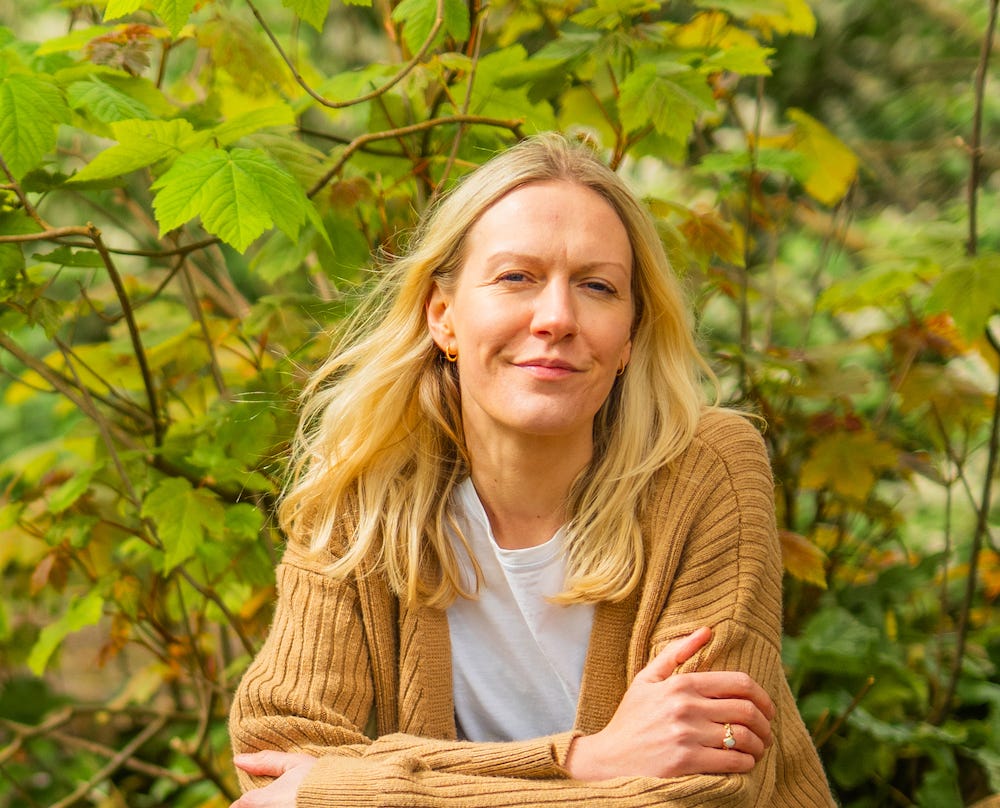
This week’s Sunday Sober Stories features Ellie Nova, a sober coach, writer and mum from East Sussex who has been alcohol-free since December 2019. After years of using alcohol to numb grief, manage difficult emotions and quiet self-doubt, Ellie found a different path, one rooted in self-compassion, creativity and genuine self-trust. In this honest and hopeful conversation, she shares how sobriety transformed not only her relationship with alcohol, but also her writing, motherhood and the way she experiences life itself.
Can you tell us a little about what your relationship with alcohol used to look like?
I started drinking at around 16 at house parties at the weekends, but it wasn’t until I was 19 at university that it very quickly became a problem for me. Not only did I start drinking large amounts several nights a week on nights out, I also started to drink to cope with painful emotions. My mum had died when I was 14 and I wasn’t held or supported to cope with that loss. I held it together for a few years, but I found that drinking helped me escape from my feelings of loneliness and grief. I quickly started to use it to cope with all kinds of emotional pain, as well as to give me confidence socialising, and it became the answer to everything.
By my mid-20s I started to get a handle on my life to some extent after a few years of complete chaos. I had a loving partner and a stable job. But I was still drinking almost every evening. I would try to take a break but could never manage more than a few days without drinking. I was so ashamed of the hold alcohol had over me, but I had no idea of how to break free from it. The only options I was aware of were AA and rehab: I had tried the former and it hadn’t been right, and didn’t have the money for rehab. So I carried on drinking.
What was your “enough is enough” moment or did it happen more gradually for you?
There were so many moments when I thought ‘my God, I HAVE to do something about this’. But I had no idea how to cope with my emotions without alcohol, so I always went back to it. I was desperate for comfort and escape from my thoughts and feelings. I had no idea how to take care of myself and love myself. I became more motivated to do something once I turned 30 and was coming closer to when me and my now-husband would want to try for a baby. There was no way I was going to become a mum while I was drinking and I was terrified I wouldn’t be able to get through a pregnancy sober, so I started looking in earnest for support.
Thankfully, I was granted what feels like a miracle. I read a Buzzfeed article that had a link to the book This Naked Mind by Annie Grace. This set me on a 20-month journey of unlearning all the beliefs I had about how I thought alcohol was helping me, understanding what it was really doing to my body and brain and to find loving, healthy ways to take care of myself and be with my feelings. I finally had my last drink on 26 December 2019, and was found out I was pregnant with son in March 2020.
What were your biggest fears about stopping drinking? And did any of them come true?
One of my biggest fears was that I wouldn’t be able to write anymore. I had been using alcohol to get myself in the mood to write: I thought it was unlocking my creativity but I later realised it had just been suppressing my fears. What I needed to do was to find a way to make writing more playful and less pressured, rather than taking a drug to override my felt sense. So I developed the very helpful practice of approaching every new piece of writing with the acceptance that it would be rubbish! It hugely took the pressure of, and of course, lots of what I wrote wasn’t rubbish at all.
Since quitting drinking I’ve taken an MA in Creative and Life Writing and been more prolific with my writing and had more creative ideas than I ever had before. I’m also able to be more committed to projects and much better at editing, which I never was before!
What’s been the most helpful thing in staying sober (tool, mindset, habit, or support)?
For years now I haven’t made any effort to ‘stay sober’ as such, as the thought to drink hasn’t popped up since the beginning of 2023 for me. In those early years when I was navigating the chronic sleep deprivation of early motherhood with very little childcare, I saw the thought to drink as a sign that I was in a lot of emotional suffering and I needed support. It didn’t mean I needed to drink. I knew, as I do now, that drinking solves nothing and makes everything worse.
There are many, many practices and mindset approaches I have used, though, that have kept me emotionally well. A big one is practicing self-compassion: I recommend Kristen Neff and Tara Brach’s work and guided meditations. This is so important because self-compassion offers us an alternative to trying to escape our feelings. Instead, we bring ourselves love and care in the moment. We acknowledge our suffering, we hold ourselves with love, and allow the feeling to be just as it is.
I also found Byron Katie’s The Work really helpful in early sobriety for questioning my thoughts. I know she’s a controversial figure, but I found that tool immensely helpful – you can find it for free on her website.
And lastly: intentionally practicing gratitude really changed my life. Every day, for the past eight years, I’ve written down three things I’m grateful for at the end of every day. It has completely changed my perspective on life and now I feel gratitude for so many things, many times over, every day.
If you could go back and speak to yourself in those early days, what would you say?
The same thing I’d say to myself if I could go back in time to any point in my life when things were tough: ‘This is really hard. You’re doing great. It’s going to be OK. I love you.’
What’s one thing you want other women to know about life without alcohol?
Life without alcohol means being truly alive. Feeling it all – which isn’t always easy. That’s OK. That’s how it’s meant to be. Being free from alcohol means building self-trust, self-confidence and resilience. You know that you can navigate your feelings and whatever life throws at you. I used to live in a state of near-perpetual anxiety and despair. Now, it’s simple and incredible: I love my life.
Thanks for sharing your story with us Ellie. You can find her on Instagram @ellienovacoaching and SubStack ellienova.substack.com.
If you’re over a year sober and would like to share your story to inspire other women, I’d love to hear from you. Please email me ali@alipaynecoaching.com.